
Optional Coverages
Water Backup, Flood, and Seepage: What’s the Difference?
Water Backup, Flood, and Seepage: What’s the Difference?
Water damage is one of the most common—and misunderstood—risks facing homeowners. Many people assume that if water enters their home, their homeowners insurance will automatically cover the damage.
Unfortunately, it isn’t always that simple.
Whether a loss is covered can depend on where the water came from, how it entered the home, and whether the damage happened suddenly or developed over time. Three terms homeowners should understand are water backup, flood, and seepage.
Although each can leave water in your basement, insurance policies may treat them very differently.
What Is Water Backup?
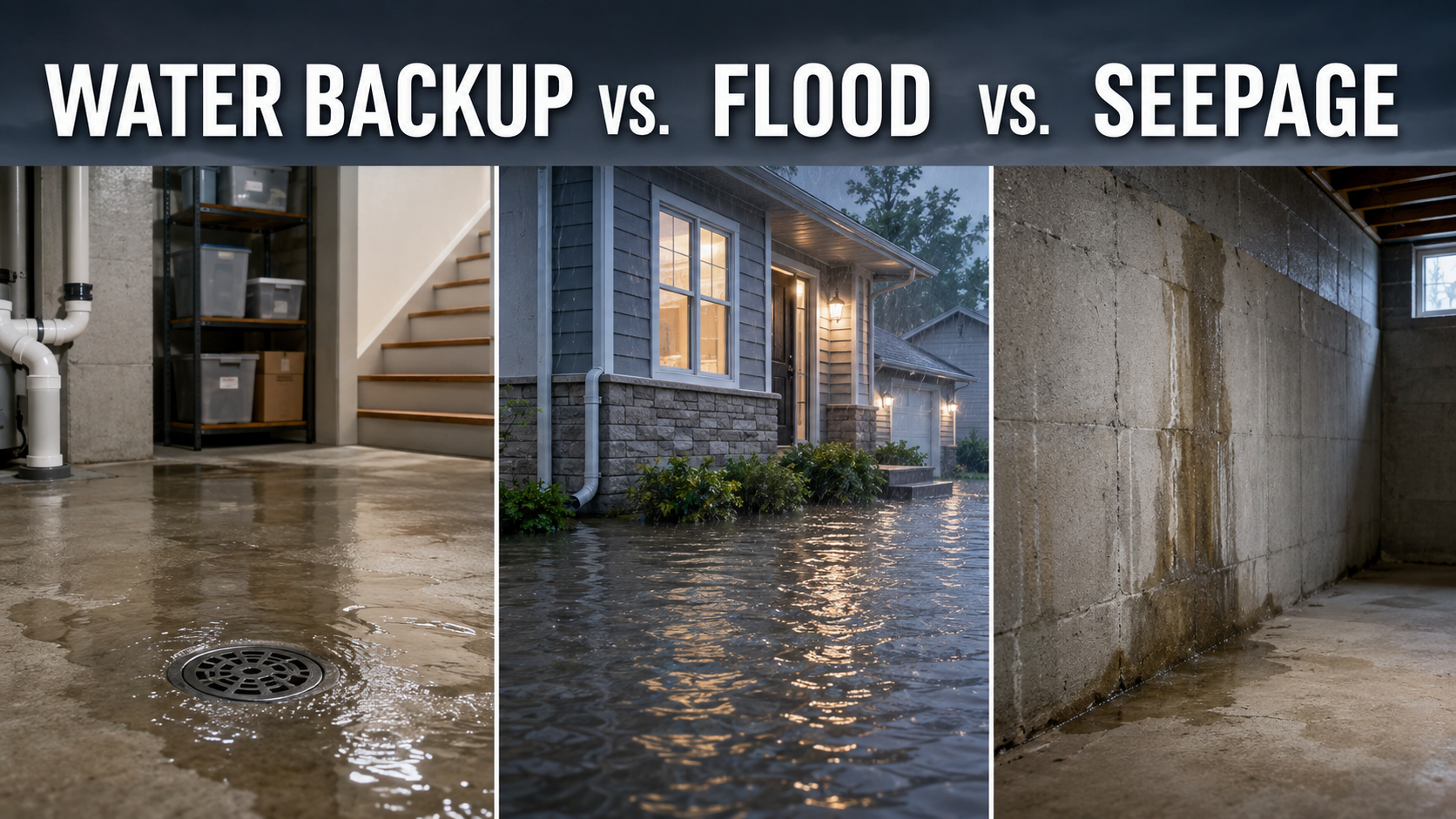
Water backup generally occurs when water or sewage reverses direction and enters a home through a drain, sewer line, or sump-pump system.
Examples may include:
Sewage backing up through a basement drain Water entering through a backed-up plumbing drain A sump pump overflowing or failing to remove accumulating water Water backing up from a municipal sewer system
A standard homeowners policy may not automatically include water-backup protection. In many cases, it must be added through an optional endorsement.
The amount of coverage available can also vary. Some endorsements provide relatively modest limits, while others offer higher limits based on the home and insurance carrier.
When reviewing this coverage, homeowners should consider more than the cost of removing the water. A serious backup could damage flooring, drywall, furniture, appliances, electrical equipment, and heating systems located in the basement.
What Is Considered a Flood?
For insurance purposes, a flood generally involves water accumulating on normally dry land and entering the home from outside.
Possible examples include:
Rising water following heavy rainfall A creek, river, or other body of water overflowing Surface water flowing across the ground and entering the home Water entering through doors, windows, or foundation openings after accumulating outside
Standard homeowners insurance typically excludes flood damage. Protection usually requires a separate flood insurance policy purchased through the National Flood Insurance Program or a private flood insurance provider.
A home does not have to be located next to a river or inside a high-risk flood zone to experience flooding. Drainage problems, rapid development, overwhelmed stormwater systems, and unusually heavy rainfall can affect properties outside traditionally recognized flood zones.
It is also important to remember that flood insurance policies may have waiting periods before coverage becomes effective. Homeowners generally should not wait until a major storm is approaching to consider purchasing coverage.
What Is Seepage?
Seepage commonly describes water that slowly enters a home through cracks, joints, walls, floors, or the foundation.
Examples can include:
Groundwater gradually entering through a basement wall Moisture repeatedly appearing where the basement wall meets the floor Water entering through foundation cracks over an extended period Ongoing dampness caused by drainage or grading problems
Homeowners policies are primarily designed to cover sudden and accidental losses. Repeated or continuous water intrusion, deterioration, maintenance problems, and long-term seepage are commonly excluded.
For example, a sudden covered plumbing loss may be treated differently from moisture that has been entering through the same foundation crack for several months.
Because seepage may point to a maintenance or structural issue, homeowners may need to address the underlying cause through repairs such as foundation sealing, drainage improvements, grading changes, gutter maintenance, or sump-pump installation.
Why the Source of the Water Matters
Imagine that three homeowners each discover two inches of water in their basements.
The first homeowner has sewage backing up through a floor drain. The second has outside floodwater entering through a basement window. The third has groundwater slowly entering through a foundation wall.
Although the resulting damage may look similar, each situation has a different cause—and could receive a very different insurance response.
Insurance coverage is determined by the policy language and cause of loss, not simply by the fact that water is present.
That is why documenting the source of the water is so important.
Steps to Take After Discovering Water Damage
If you discover water in your home, prioritize safety and take reasonable steps to prevent additional damage.
Consider the following actions:
Avoid standing water if electrical equipment or outlets may be affected. Stop the source of the water when it is safe and practical to do so. Contact the appropriate emergency, plumbing, restoration, or remediation professionals. Photograph and record the affected areas before removing damaged property. Keep receipts for emergency services and temporary repairs. Contact your insurance agent or carrier promptly to discuss the situation. Avoid permanently discarding damaged property until you receive appropriate guidance.
Do not put yourself or your family at risk to inspect or protect property. Sewage-contaminated water and electrically charged standing water may require professional assistance.
How Homeowners Can Reduce Their Risk
Homeowners may be able to reduce the likelihood or severity of water damage by:
Testing sump pumps regularly Installing a battery-powered sump-pump backup Keeping gutters and downspouts clear Directing downspouts away from the foundation Checking the property’s grading and drainage Inspecting the foundation for cracks Avoiding the disposal of grease or inappropriate materials through drains Considering a backwater prevention valve where appropriate Having plumbing and sewer lines inspected when problems are suspected Reviewing water-backup and flood coverage before severe weather occurs
Preventive maintenance cannot eliminate every water loss, but it may help reduce the risk of a costly surprise.
Review Your Protection Before Water Enters Your Home
Water backup, flood, and seepage are not interchangeable insurance terms. Each may involve different coverage, exclusions, limits, deductibles, and policy requirements.
A good insurance review should help answer questions such as:
Does my homeowners policy include water-backup coverage? What is the coverage limit? Does the endorsement include sump-pump overflow? Should I consider a separate flood insurance policy? Are my finished basement and personal belongings adequately protected? What water-related exclusions appear in my policy?
At Jividen Insurance, we help homeowners understand what their policies are designed to cover—and identify areas that may deserve additional attention.
Contact Jividen Insurance to request a personalized review of your homeowners coverage.
Coverage varies by insurance carrier, policy form, endorsement, cause of loss, and individual circumstances. This article is intended for general educational purposes and does not alter or guarantee coverage under any insurance policy.
Talk with Jividen Insurance